What Should You Do if Your Doctor Has Bad Reviews?
Feeling Dismissed and Ignored past Your Physician? Do this.
By Helene M. Epstein
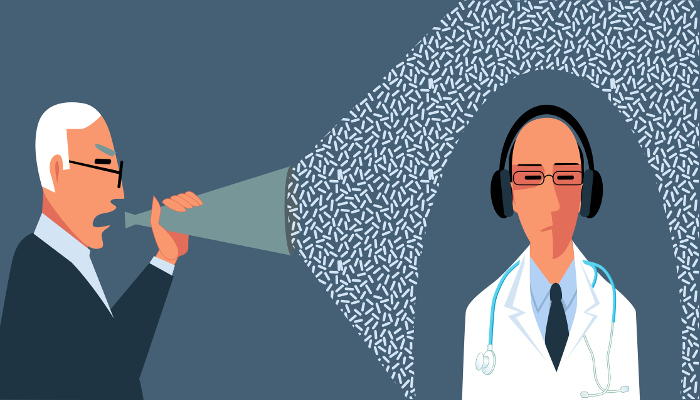
Trust is an essential office of healthcare. When nosotros feel poorly, nosotros visit our doctor with our hopes high, trusting that she will help the states heal. We bring her our concerns, our list of symptoms, our history, and our questions. In substitution, we expect answers, or at the very least an effort to find answers.
What if we feel like our trust isn't returned? What if our symptoms are dismissed or our story considered unlikely? What practice nosotros do if we experience strongly in our gut that something is wrong despite the medical skilful who says we're fine and nosotros can become habitation? Or we're told it'southward just stress, or a touch of the flu, or a common childhood illness? Or the worst dismissal heard by and then many: information technology'due south all in your caput?
Being ignored by your healthcare professional person is i of the about common complaints heard by patient advocates, healthcare reporters, and at present social media. Twitter blew up last month with the hashtag #PatientsAreNotFaking in reaction to a video by a nurse making fun of a "patient" (played by the nurse) exaggerating her symptoms. Over 77 thousand patients tweeted delayed diagnosis stories in simply the outset week. While we don't know the details of these stories, the passionate tweets displayed the amount of fear, anger, and harm that a breach of trust tin can cause. When we visit our healthcare professional at our most vulnerable, learning that our symptoms are being discounted hurts. The bear upon can cause both emotional and practical impairment. Too often dismissed patients avoid health checks in the future and go without proper medical care and screenings.
At that place is a subtle difference between a patient who experiences a delayed diagnosis and one whose symptoms are dismissed. Delay tin happen for many reasons. The difference may exist as elementary as having a doctor or nurse who asks yous to return if your symptoms alter or become worse.
Dismissed patients share a more nuanced tale. They are not believed, or they're told they're overreacting. They're accused of exaggerating their symptoms or hurting. Or they suggest something that the doctor considers to be then far-fetched that the dr.-patient relationship itself is damaged.
Immature doesn't always equal healthy
Historic period bias comes in all shapes and sizes. Sometimes, a patient's symptoms are dismissed because they are considered as well young and generally healthy for the healthcare professional to even consider a serious disease. [Read the section "When parents' concerns are dismissed"] Although these young patients' symptoms weren't dismissed, they all experienced diagnostic mistake because doctors didn't wait that people their age could take these weather condition or complications: Jessica Barnett, Alex Reed, John Michael Knight, and Rory Staunton.
Young women with endometriosis frequently report existence dismissed by doctors, even their gynecologists. Endometriosis is a common status for women in their child-bearing years. It happens when endometrial tissue, normally confined to the lining of the uterus, is found in areas of the intestinal cavity exterior of the uterus. The about common symptom is pain, and over time the condition tin can pb to scarring and adhesions. Teens and immature women may suffer for a decade or longer before diagnosis and treatment. Co-ordinate to a major 2008 clinical written report, "A surprisingly large number of the respondents… reported that their physicians had not taken them seriously overall or that they had been told that nothing was wrong quondam before diagnosis."
Platinum-selling singer Halsey shared her endometriosis diagnosis with fans, letting them know she spent years in pain "with doctors essentially telling me I was being a big infant about my period" before getting diagnosed at 22. When a patient's hurting is discounted or ignored, it can have profound impact on their mental health. Halsey wrote, "Finding out I had endo was the well-nigh bittersweet moment because it meant I wasn't crazy!"
When racial bias translates into medical bias
We know that many groups have higher rates of diagnostic error because of cognitive bias on the part of the healthcare practitioner: women, children, the obese, and the elderly all experience this. It's unfortunately true across the board for people of color. They routinely do not get the same quality of care that white patients do, regardless of their level of pedagogy or financial resources.
Studies have shown that African-American patients have a greater tendency toward sure medical conditions, like inflammatory breast cancer, prostate cancer, lung cancer, and many others. Nonetheless, they get screened at lower rates than white patients do. Ane issue that has received much needed media attention is the distressingly high rate of maternal mortality (death of a mother due to childbirth-related complications) for all U.Southward. women. However rates for Blackness women are three to four times higher than for non-Hispanic white women, ofttimes because their reported symptoms are not taken seriously. Studies on healthcare providers' evaluations of patients' hurting levels also signal that people of color are judged and treated with lower levels of concern and pain medicines than white patients are.
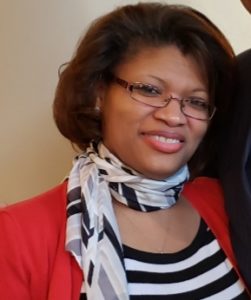
Kimberly Rodgers
Stroke is another condition that hits African American women twice equally oftentimes as white women, at younger ages, and more severely. Kimberly Rodgers didn't accept fourth dimension to get ill: she was the primary caregiver for her father who had suffered a major stroke, was working a high-stress job, and attention graduate schoolhouse in Chicago. When she began to experience migraines and slumber eluded her, she consulted her chief care doctor. As an African American woman, especially one with a family history of stroke, her symptoms should take been taken seriously. Instead, she was told to see a nutritionist, get clinical massages and seek anger management counseling to save her stress.
A few months later, she developed new, alarming symptoms. She suddenly couldn't see anything while driving her car on a highway. Though she recovered her eyesight, days later she developed a sudden sharp forehead pain and was unable to figure out how to piece of work the washing machine. Her face up looked strange to her in the mirror. She knew something was terribly wrong. Her aunt, a nurse, told her to get to the emergency room immediately.
Kimberly was having a stroke due to a blockage in her carotid artery. She recognizes now that in that location were several missed opportunities to take hold of it earlier. Her physician did not do a full physical exam, check her cholesterol, or hash out blood pressure treatments. Nor did the medical practise discuss risks and warning signs when Kimberly told them about her father'southward stroke. When she came in with complaints virtually migraines and insomnia, they failed to consider stroke and missed the chance to society a simple, non-invasive ultrasound test that checks for blockages in the carotid artery. Kimberly recognizes she didn't know enough to raise the issue herself.
She's working hard to alter that for the Chicago African-American community where stroke fatalities greatly outweigh other communities'. Kimberly sits on two boards for Northwestern Infirmary, one focused on educating all minority communities and women about stroke, and the other seeking solutions for healthcare gaps for several weather condition among minorities. She changed her graduate studies focus so she tin can brainwash adults of all genders and races virtually strokes and heart attacks. And she speaks about her journey, inspiring other patients to get involved in the diagnostic process.
Taking Ane'south Lumps
The expression "taking one's lumps" means to stoically put up with an unhappy ongoing situation. In medical terms though, finding a lump ways the possibility of "infections, inflammation, tumors or trauma." So why were these patients' lumps dismissed?
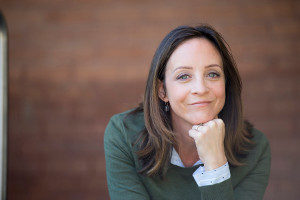
Jennifer Campisano
Jennifer Campisano, a SIDM Board of Directors member, plant a lump in her breast when she was nursing her kid. 1 medico suggested it was an infection and prescribed Tylenol. The next ane said information technology was nothing to worry well-nigh and suggested she could have it removed when she finished breastfeeding. Three months later on, Jennifer sought the advice of a surgeon and a radiologist who biopsied her and diagnosed her with stage 4 breast cancer. She underwent years of chemotherapy. While someone was finally taking her symptoms seriously, they were still non completely right. It turned out she had both an earlier stage breast cancer and sarcoidosis, an automobile-immune disease that tin can mimic cancer. Jennifer's dismissed lump was a complex combination of conditions, i that didn't require the years of chemotherapy and its side furnishings. Reviewing her medical record, she learned that sarcoidosis had been suspected much before. Still, considering her tumor was and then large the medical squad feared the cancer could spread rapidly (metastasis) and started chemo immediately. In one case chemo began, they were unable to exam for sarcoidosis. Had she been tested before starting chemo her treatment plan would have been unlike; probably a mix of medications for the sarcoidosis and surgery/radiation for the breast cancer.
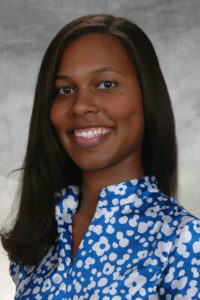
Diana Cejas
Pediatric neurologist Diana Cejas MD was a start year medical student when she discovered a small marble-sized lump in her neck. She was a second-year resident, five years after, when she was finally diagnosed. Despite the lump and Diana's level of concern growing in size over the years, she was uncomfortable "making a fuss" virtually it. Role of her wanted all of the various physicians to be right; that the lump was nothing to worry almost. Part of her business was challenging the "power dynamic", being a medical student, and later a new md, confronting more experienced attending doctors and experts.
Yet she couldn't let it go, either. Every fourth dimension she was examined, for whatever reason from annual check-up to a different medical concern, Diana would ask about the growing lump on her neck. She even saw a renowned specialist, who also told her to cease worrying. Nevertheless, towards the end of her kickoff year every bit an intern, her symptoms had changed and were impossible to ignore: dizziness, which she hoped was due to the long hours and pressures of being a get-go year resident, and waxing and waning needle-like pain, which presently became constant. She too noticed that the lump was large plenty to be seen casually in photographs.
Finally, after a 28-hr shift and in pain that prevented sleep, she was determined to practise something about it. Luckily, Diana was scheduled for a concrete the next day. She described her symptoms to the main intendance doctor as though she was presenting a patient on rounds to her attending: factual, detailed, and without emotion. She was surprised to larn that her constant questions nigh the lump had never been noted in her charts. Then she was dismayed when the doctor dismissed her symptoms once more.
This time, she didn't only accept the dismissal. "I was less angry than upset and I was just determined." Diana says she told the medico, "I'm not leaving here until we practice something about this. And then, to shut me up, she said, 'We can get a CT (computed tomography) scan.'" She got the test, walked up ii flights to return to the pediatric floor, and by the time she arrived on her floor, "my master doctor was paging me." Information technology was a rare grade of vascular tumor, a carotid body paraganglioma. Even rarer, it was malignant. Due to the long filibuster, and complications from the surgeries including stroke, Diana'south "lump" is gone but her own health was dumb.
At present, equally a pediatric neurologist in Due north Carolina, Dr. Cejas listens closely to her patients and helps them detect solutions. She too advocates for people with disabilities, past speaking on the topic and sharing her own story.
What you can practice if your symptoms are dismissed or ignored
All of these stories offer u.s.a. valuable lessons. If you feel that your healthcare professional isn't really listening or heeding your concerns, there are many steps y'all can take to get the answers you seek. Here are a few suggestions:
- If your symptoms are ignored, ask, "What might this be?" And then ask, "What do I practice if these symptoms get worse?" These type of questions help the doctor to terminate and consider the options. Learning from Jennifer's story, yous might want to phrase it as, "What else might this be?" Just because you have one established status, doesn't mean that you lot can't accept a 2d issue that needs independent investigating.
- Endeavour to find a medical practice you tin can trust. Healthcare professionals are under severe time constraints just that doesn't mean they shouldn't take fourth dimension to hear their patients' reasonable concerns and goals. If you lot feel that your doctor or nurse-practitioner is consistently ignoring what you have to say, even if your symptoms continue to progress, find another master care practice.
- If you experience your primary care doctor doesn't take your symptoms seriously, ask for a referral to a specialist or go to a different practice for a second stance. A fresh set up of eyes can be extremely helpful.
- Review how to present your symptoms factually, clearly, quickly, and without unnecessary minutiae. Sometimes symptoms aren't ignored by the doctor, they're merely lost in a listing that's too long or includes what the clinician feels are irrelevant details. Ask them how to best present the information. Most chiefly, put your symptoms into context.
- Larn well-nigh the types of screenings that should be performed routinely for patients of your age, gender, and race. Here is a link to a document that lists preventative screenings for adults by these criteria. Discuss it with your medical practice. If they decline to do the relevant routine screenings, seek some other medical practice that is more than conscientious and aware of why different genders, ages, and races have different medical concerns.
- Speak up. Diana Cejas recognizes that her reluctance to share the depth of her concerns played a function in how long it took her to get diagnosed. All the same, she knows that many patients feel uncomfortable asserting themselves to doctors. Dr. Cejas says, "Exist willing to fight for yourself and your body but don't be willing to put on the boxing gloves" when you showtime walk in. Instead, she recommends you ask for assistance figuring out how to bargain with your symptoms now and somewhen notice the crusade of those symptoms.
- While information technology is of import to acquire well-nigh your symptoms from reliable sources, doing then doesn't mean enervating specific tests or treatments for some rare disorder you haven't been diagnosed with. Dr. Cejas recommends asking for help in dealing with your symptoms politely yet firmly.
The Society to Better Diagnosis in Medicine (SIDM) catalyzes and leads alter to meliorate diagnosis and eliminate impairment from diagnostic fault. Nosotros work in partnership with patients, their families, the healthcare community, and every interested stakeholder. SIDM is the only organization focused solely on the problem of diagnostic mistake and improving the accuracy and timeliness of diagnosis. In 2015, SIDM established the Coalition to Improve Diagnosis, to increase awareness and deportment that improve diagnosis. Members of the Coalition represent hundreds of thousands of healthcare providers and patients—and the leading health organizations and regime agencies involved in patient intendance. Together, we piece of work to find solutions that raise diagnostic safety and quality, reduce harm, and ultimately, ensure amend wellness outcomes for patients. Visit our website at www.improvediagnosis.org, and follow us on Twitter or Facebook.
Helene K. Epstein writes about patient safety and family health. Her goal is to aid readers apply of import new information to their ain lives. Subscribe to her website at www.hmepstein.com and follow her on Twitter, Facebook, and YouTube.
Dx IQ is made possible with funding from the Mont Fund and the Gordon and Betty Moore Foundation.

This work is licensed under a Creative Commons Attribution-NonCommercial-NoDerivatives 4.0 International License.
Republish our Dx IQ manufactures for gratis, online or in print, under Creative Commons license. Please do not edit the piece. Ensure that you lot attribute the author and mention that the article was originally published past the Society to Improve Diagnosis in Medicine. If you lot republish, we'd honey for you to let us know by sending an email to info@improvediagnosis.org.
jacksaidonithith71.blogspot.com
Source: https://www.improvediagnosis.org/dxiq-column/feeling-dismissed-and-ignored-by-your-doctor-do-this/
0 Response to "What Should You Do if Your Doctor Has Bad Reviews?"
Post a Comment